
A medical technology may be technically strong and still be difficult to understand from a product page or presentation. Video can make the expertise, workflow, product, clinical perspective, customer experience, or company story more tangible while giving teams a reusable source asset for sales, web, events, campaigns, social, email, and recruiting.
The strongest video programs start by deciding what needs to be understood and where the content will be used before cameras, locations, or formats are selected.

Icovy develops the format around the job the content needs to perform. Some assignments need live action. Others need animation, screen capture, motion graphics, interviews, product footage, or a combination of formats.



We start with purpose, audience, source material, review requirements, and distribution. That determines whether the production should rely on interviews, live action, product footage, animation, motion graphics, screen capture, archival assets, or a combination.
The same production can often support several content categories when the media day is planned intentionally.
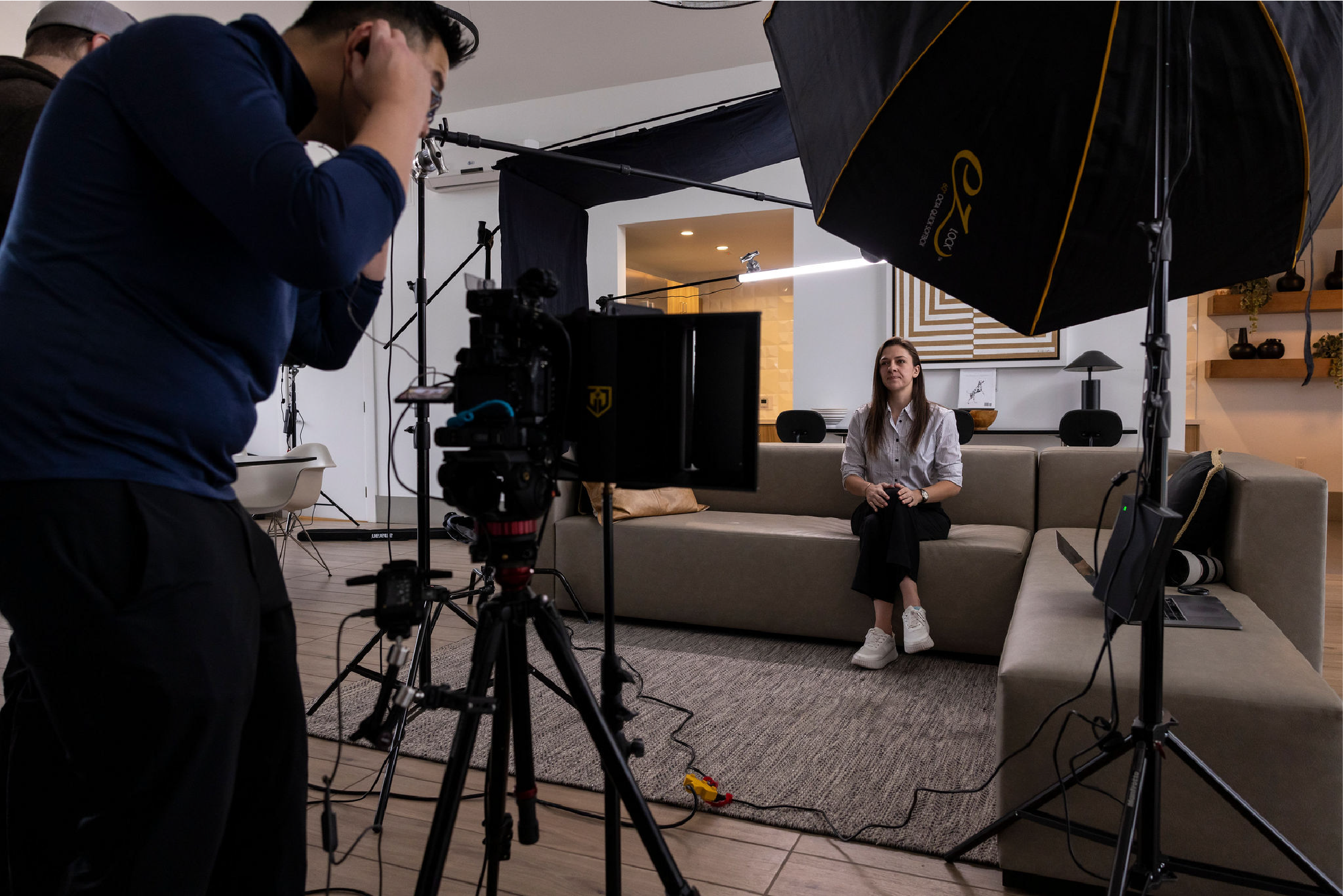
We handle every phase of production in lockstep with your internal teams from regulatory to creative.

1. Discovery & Strategy


2. Creative Planning

3. Production

4. Post-Production

5. Activation & Optimization
A medical device video company creates more value when it understands what the footage needs to support after production. Icovy can plan the video alongside the website, product launch, event, sales enablement, social calendar, paid campaign, HCP program, patient campaign, PR, or content strategy that will use it.
That creates opportunities to capture the right interviews, B-roll, product shots, alternate takes, stills, and short-form moments while the people and locations are already available.
“Icovy helped us produce 6 investor-ready videos in 4 weeks. We used them to land distributor partnerships, convert inbound leads, and anchor our pitch decks.”
— VP of Marketing, Surgical Robotics Company

Build a medical device video production plan around the story, audience, channels, and commercial moments your team needs to support now and later.

Common questions MedTech teams ask when selecting a medical device video production agency, video company, or content production partner.
A medical device video production agency helps plan, capture, edit, and distribute video content around the technical, clinical, corporate, patient, product, and commercial stories a MedTech company needs to communicate. The work can include strategy, scripting, interviews, filming, B-roll, product footage, animation, motion graphics, editing, captions, localization, and channel-specific derivatives.
Medical device video companies need to be comfortable with technical products, specialized audiences, regulated communication, internal review, controlled environments, HCP or patient participation, permissions, product terminology, and the need to reuse footage across several commercial channels. Production quality remains essential, but the planning requirements are often more complex.
Choose the format based on what the audience needs to understand. Live action is strong for people, facilities, culture, interviews, and real-world context. Animation is useful for internal anatomy, mechanisms, abstract workflows, or controlled product visualization. Screen capture works well for software and interface workflows. Many MedTech videos combine two or more formats.
Yes, when the participants, permissions, location, scope, and client review requirements support the production. Physician, patient, customer, and employee stories can each require different consent, disclosure, privacy, legal, medical, or institutional considerations that should be established before filming.
Yes, depending on site access and client requirements. Production planning can address safety, gowning, restricted areas, confidentiality, equipment limitations, identifiable information, schedule windows, and the approvals required by the location. The site owner and client determine the applicable rules.
Launch video can include product storytelling, interviews, demonstrations, animation, event content, sales clips, social cutdowns, website content, PR extensions, and paid-media assets. Planning those uses before production allows the team to capture more of what the launch will need in one coordinated effort.
Build the production around a content matrix. Identify the long-form story, interview themes, product shots, vertical or square moments, event loops, sales clips, social hooks, still frames, captions, and B-roll that can be captured while the people and locations are available. That reduces the need for repeated shoots.
Measurement depends on the job of the video. Useful signals can include completion, watch time, replay behavior, page engagement, campaign response, meeting requests, sales usage, training completion, distributor adoption, event interaction, content reuse, and downstream commercial activity where analytics can support the connection.
Timing depends on the number of locations, participants, scripts, approvals, animation requirements, travel, production days, review rounds, and derivative assets. Establishing the source materials, participant approvals, interview plan, and review checkpoints early usually has more impact on schedule than the filming itself.
Bring the communication objective, priority audiences, product and company information, approved claims or source material, existing brand guidance, locations, potential interview participants, major launch or event dates, distribution channels, review stakeholders, and examples of content the team expects to reuse. Those inputs help the production plan capture what the business actually needs.